Our guests for this episode are José Aguirre and José Antonio Molina, the two driving forces behind the biodiversity monitoring project at Universidad Complutense de Madrid. José Aguirre, an expert in urban bird ecology and evolutionary biology at the Department of Biodiversity, Ecology and Evolution, brings a deep passion for the study of wildlife. José Antonio Molina, who has taught botany at the University for 35 years, specialises in plant communities and urban vegetation – making biodiversity a shared focus of both scientists.
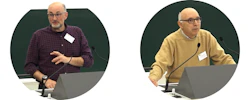
José Aguirre (left) and José Antonio Molina (right).
The roots of Universidad Complutense de Madrid's biodiversity monitoring project trace back to 2008, when the effects of the global financial crisis were being felt across Europe's universities. With shrinking budgets for traditional field courses – which make up nearly half of the teaching at the biology school – the team launched new research activities on campus to provide students with hands-on experience in tracking local wildlife and plant communities.
At first, the monitoring project focused only on butterflies, dragonflies, and birds. But in 2019, José Antonio Molina joined the initiative, bringing his expertise in vegetation monitoring to expand their horizons.
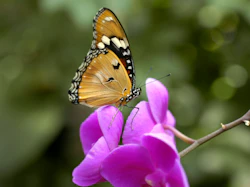
One surprise the project uncovered: while it was known that orchids bloomed on campus, systematic monitoring revealed a remarkable diversity of orchid species! As the project's findings began to inform university decisions on maintaining and enhancing campus biodiversity, researchers and students witnessed an increase in the overall number of orchids.
The project’s blend of research, teaching, and citizen science has been so successful that the university’s management now seeks their advice on making the campus greener and healthier. Their findings have already shaped university policies – most notably the elimination of Glyphosate, which has led to a visible resurgence of butterfly populations. Yet, the project’s influence doesn’t stop at the campus gates. City officials in Madrid have also turned to the project’s findings for guidance in the development of a long-term plan to enhance green spaces and biodiversity across the city. This collaboration demonstrates the potential for universities to provide valuable scientific advice to local governments and contribute to broader sustainability goals.
As José Antonio Molina and José Aguirre explain, everyone is invited to take part in biodiversity monitoring – whether by joining as a bird ringer* or contributing in other ways. The project at Universidad Complutense de Madrid serves as a model for other universities and cities aiming to build a more sustainable future, together.
Tune in to this episode and discover how our Una Europa partner in Madrid is fostering biodiversity, engaging the community, and building bridges between academia and urban policy planning.
*If you’d like to learn more about bird ringing and its roots in citizen science, check out our second Citizen Science Podcast episode!