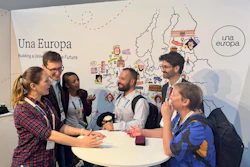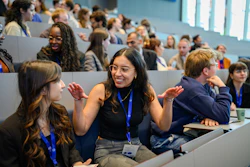
This fourth episode takes us to the historic Uniwersytet Jagielloński w Krakowie, Poland, where we speak with Dr. Marcin Zubek from the Institute of European Studies, who specialises in foreign policy. Marcin has been involved with our alliance and its Europe and the World Focus Area for some time already. He not only helped to design the Una Europa Joint Bachelor in European Studies, but he also plays an important role in shaping the next generation of European Studies researchers as a teacher in the programme. He is also a researcher in REGROUP (Rebuilding Governance and Resilience out of the Pandemic), a significant Horizon Europe-funded project designed to help the European Union navigate the complex social, political, and institutional challenges exposed by the Covid-19 pandemic.

Dr. Marcin Zubek
REGROUP sought to understand how the pandemic opened new avenues for re-evaluating how to structure governance and build resilient societies. How can positive change be effected in a way that truly reflects the needs and concerns of the people that are impacted by government policies? REGROUP sought to place citizens front and centre by creating mini-publics, a citizen science tool based on carefully constructed groups of randomly selected citizens, chosen to reflect the diversity of the wider population. Those mini-public groups received access to balanced information and were given time to engage in discussions on knowledge, trust, and disinformation.
" We asked citizens about recommendations on how to deal with four main themes: scientific communication, the role of non-elected experts in decision-making processes, disinformation, and trust in political institutions. "
Dr. Marcin Zubek on how the mini-publics engaged citizens.
Five of the participating universities in REGROUP organised local mini-publics that focused on policy advice at the municipal and national level. Marcin Zubek gives us more insight into the process at Uniwersytet Jagielloński w Krakowie. He shares details about the logistical challenges and rewarding outcomes of organising the Kraków event, where participants, despite hurdles, developed concrete policy recommendations focused on educational and participatory reforms.
The five national mini-publics were synthesised in a larger event held in Brussels by bringing together participants from each of the local events. Navigating multilingualism proved a challenge, yet participants successfully engaged in constructive debates on crucial issues like disinformation and science communication. In the end, this transnational event in Brussels produced recommendations to EU policymakers emphasising the need for clear, reliable information and greater transparency.
Tune in to this podcast episode to discover the important role of citizen participation in science and policy-making. Learn how mini-publics can empower people and enable them to make a meaningful contribution to shaping the future of Europe.
" We should not go forward without the citizens' input. After all, they are the ones consuming the disinformation, and they are the ones who should be equipped with the ability to recognise whether they are misinformed or not. "
Dr. Marcin Zubek reflects on the importance of citizen engagement to shaping government policy around trust and disinformation.